
Amazon PPC Keyword Cannibalization Control
How search terms work →Traffic Cannibalization Control prevents keyword cannibalization in Amazon PPC campaigns by eliminating internal keyword overlap and bidding conflicts across campaigns.
Stop internal keyword overlap before it distorts bids, traffic ownership, and PPC control.
For the keyword framework underneath this problem, see the Amazon Keywords guide.
Accounts where multiple campaigns or ad groups compete for the same search term and distort PPC efficiency.
Traffic ownership through cross-minus logic and duplicate detection instead of manual restructuring that does not scale.
Lower artificial CPC pressure, stronger attribution clarity, and cleaner optimization signals across the account.
What Is Keyword Cannibalization in PPC?
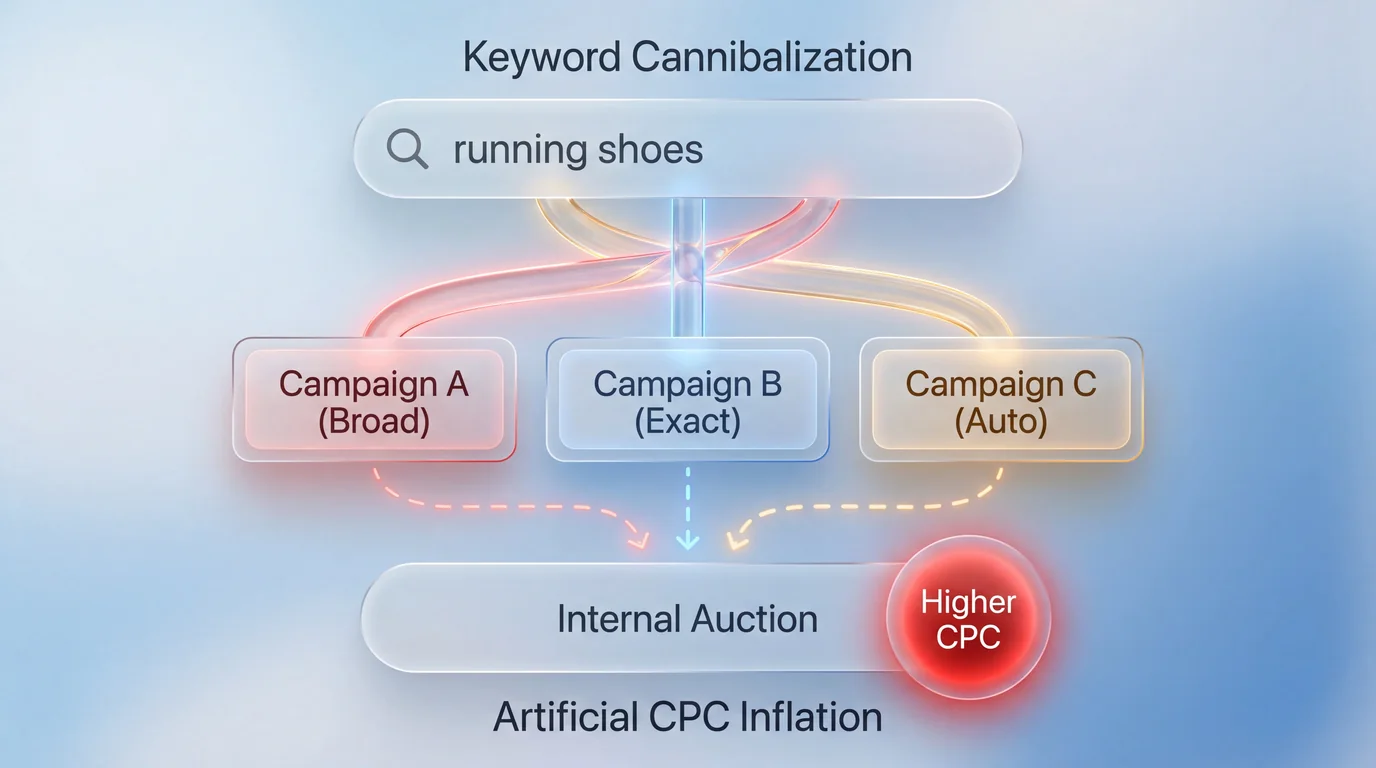
Keyword cannibalization in PPC occurs when multiple campaigns or ad groups compete for the same search term within a single account.
Instead of consolidating performance data, traffic becomes fragmented:
- Campaigns bid against each other
- CPC increases artificially
- Budget allocation becomes inefficient
- Conversion signals are diluted
Over time, this internal competition reduces optimization accuracy and distorts campaign learning.
For the query layer behind that overlap, see the Search Terms guide.
Why Manual Keyword Restructuring Does Not Scale
In traditional PPC platforms, advertisers often attempt to:
- Remove duplicate keywords
- Move keywords to a different ad group
- Restructure campaigns manually
While possible in smaller accounts, this approach becomes operationally complex and unsustainable at scale.
Instead of relying on constant manual keyword migration, SalesFortuna resolves cannibalization structurally at the campaign and search-term level.
How Traffic Cannibalization Control Works Inside SalesFortuna
The system eliminates overlap through two structural mechanisms: Cross-Minus logic and Duplicate Control.
For the blocking logic behind that step, see the Negative Keywords guide.
Cross-Minus
Excludes internal competition between campaigns.
When a keyword exists in an Exact campaign and also appears in any non-Exact match type (Auto, Broad, or Phrase) within the same advertising family, the system designates the Exact campaign as the structural owner.
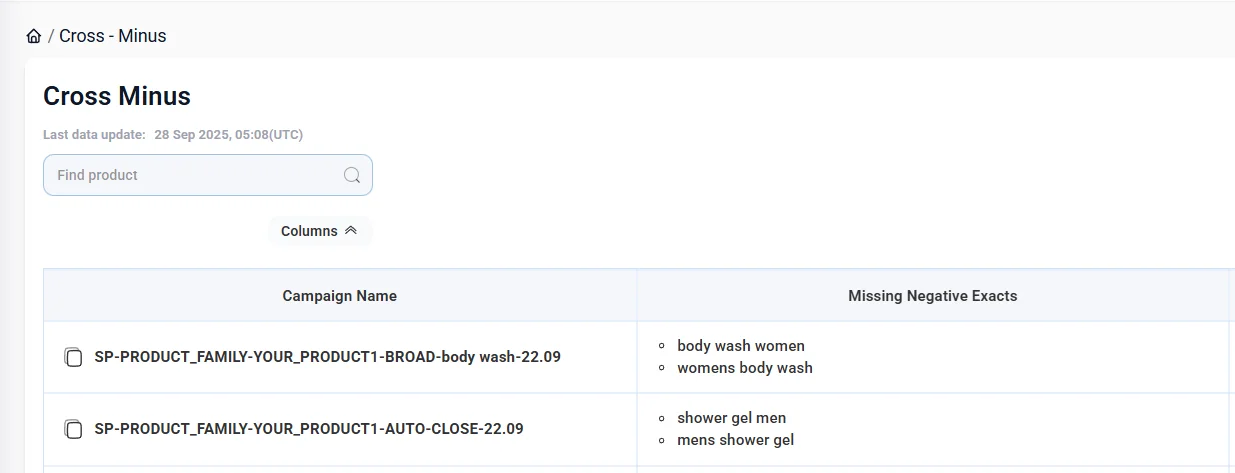
The system audits all related campaigns and automatically inserts a Negative Exact in every non-Exact campaign where that exclusion is missing. This consolidates all statistics for the search term into a single campaign, prevents internal bidding conflicts, and allows precise control over CPC and placements.
The keyword does not need to be present across all match types simultaneously. Overlap with any non-Exact campaign is sufficient to trigger structural consolidation.
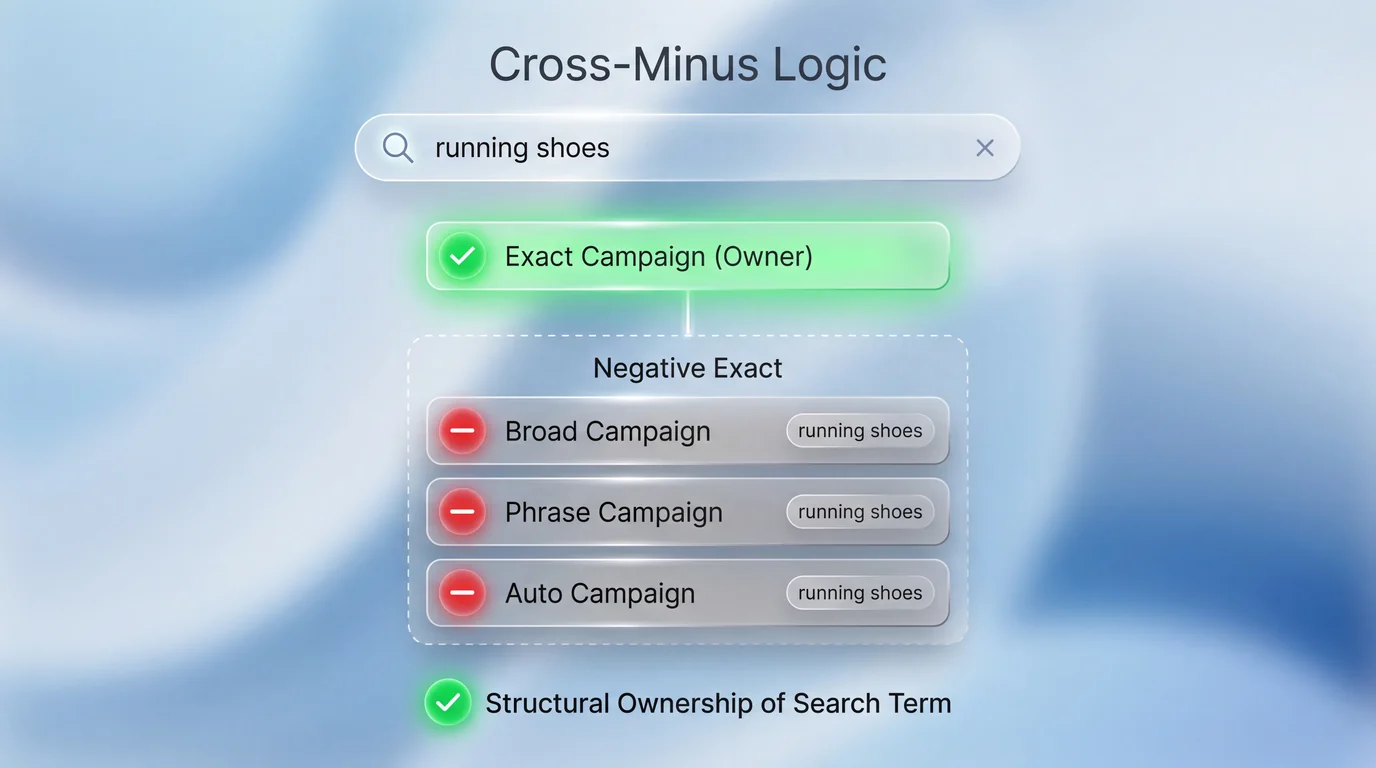
Cross-Minus logic is automatically applied during campaign creation:
- When creating an Exact or ASIN campaign, its targets are added as negatives to all related search campaigns within the same family.
- When creating Broad, Phrase, Auto, or Category campaigns, existing active Exact targets within the family are structurally protected through negative layering.
This ensures consistent traffic ownership from the moment campaigns are launched and prevents future cannibalization before it occurs.
Duplicates Control
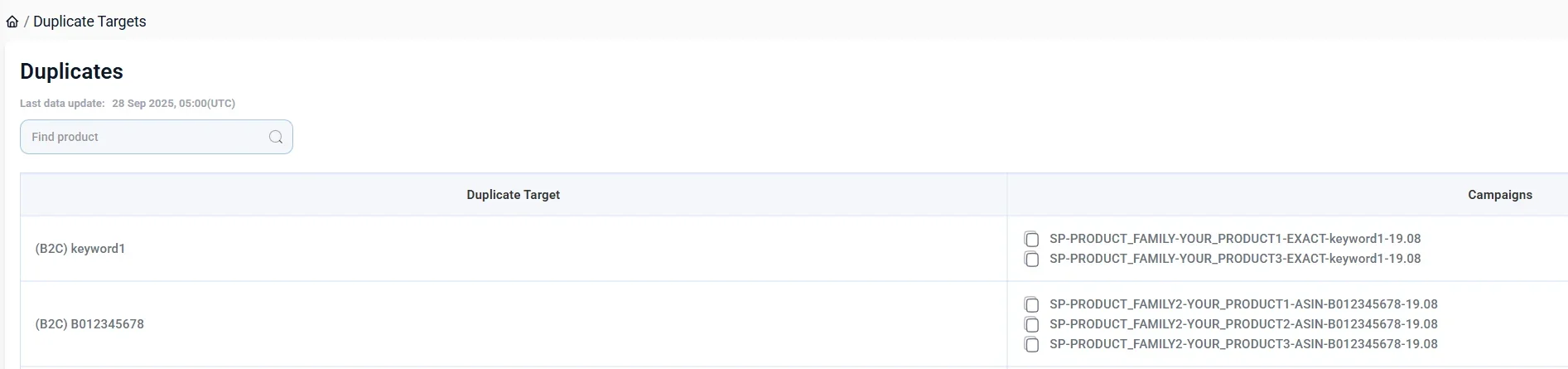
Fortuna automatically detects duplicate campaign structures within the same product family or portfolio.
A duplicate is strictly defined as two or more campaigns that share the same:
- Ad type (SP / SB / SBV / SD)
- Match type (Exact / ASIN / Broad / Phrase / Category / Auto / Audience)
- Ad target
Only when all three parameters match simultaneously within the same structural family are campaigns classified as duplicates.
For example, SP Exact and SBV Exact campaigns targeting the same keyword are not considered duplicates, since the ad type differs.
When such duplication is detected, the system generates an alert and notifies the advertiser. No automatic restructuring is applied: the advertiser decides which campaign should remain active.
This ensures:
- Full user control over structural decisions
- Clear visibility into traffic fragmentation risks
- More accurate optimization once duplicates are resolved
Strategic Impact
By eliminating keyword cannibalization, accounts maintain cleaner attribution, lower artificial CPC pressure, and stronger optimization signals.
Recommended Reading
Free Trial - No Credit Card
Automate your Amazon PPC today
14-day free trial. SalesFortuna optimizes bids 6× daily, harvests negatives,
and adjusts strategy based on real conversion data.